
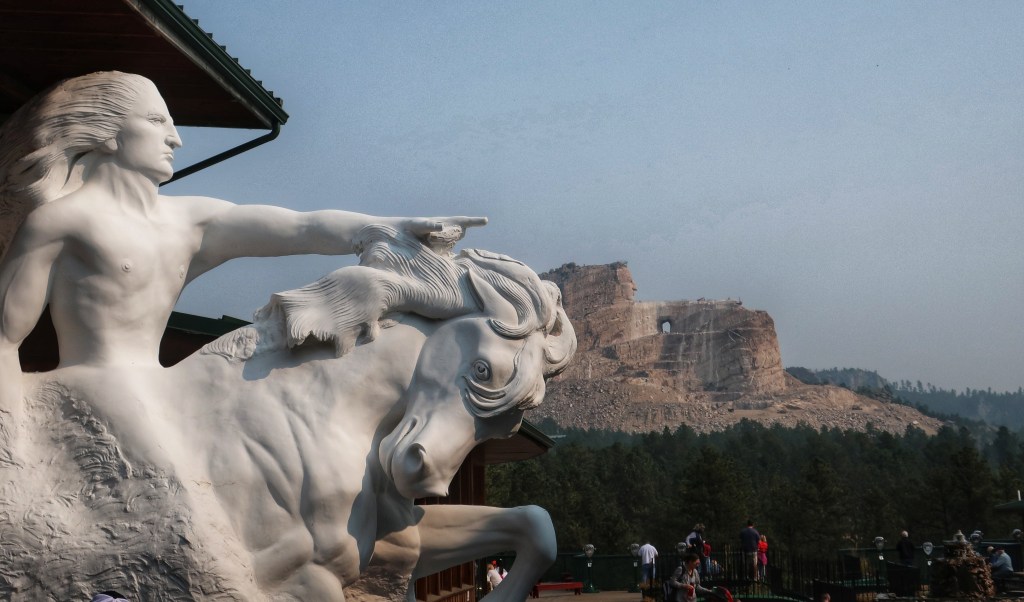
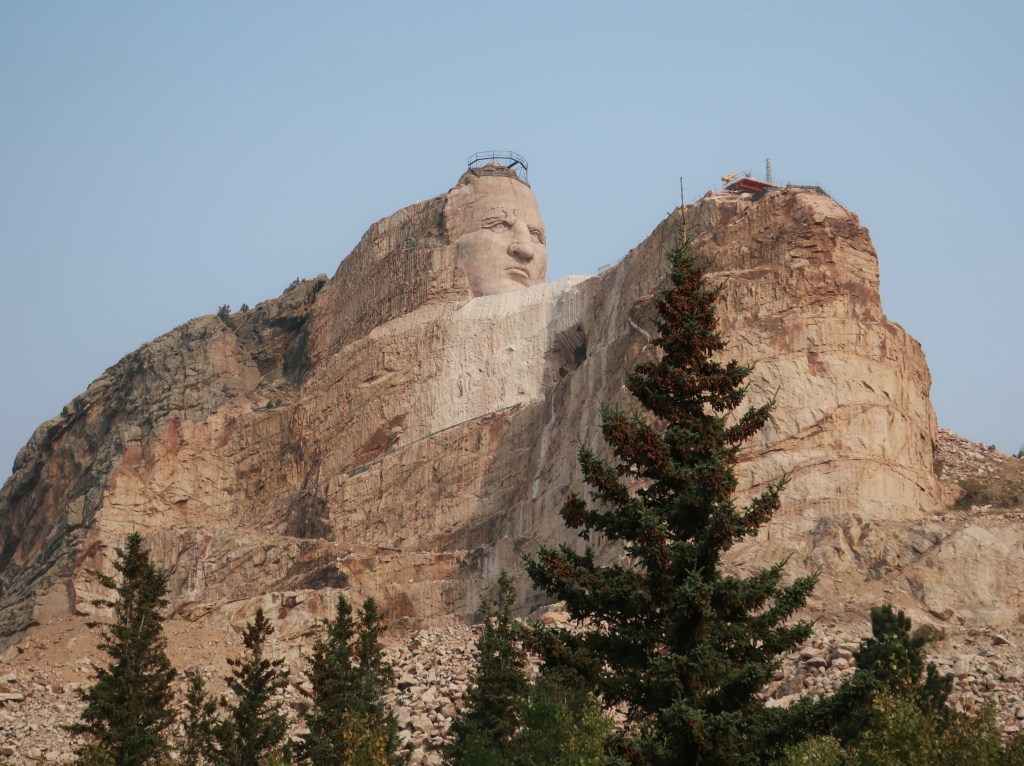
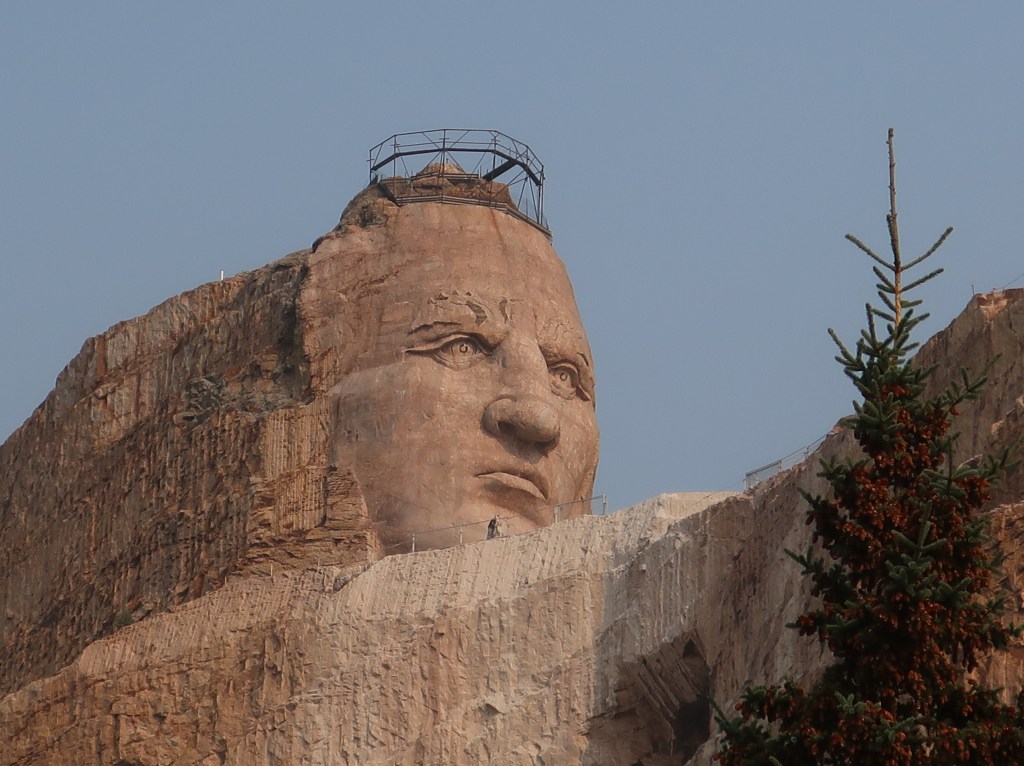
Its been another great day, other than the smoke haze. Packed up camp this morning and ran over to the Crazy Horse monument. This thing is huge! Crazy Horse was a Sioux war chief that was very successful against the U.S. calvery. In fact his battle tactics were (and maybe still are) taught at West Point. At any rate, he was killed under questionable circumstances while in peace talks at Fort Robinson. After the Mount Rushmore project started, some of the Lakota wanted to show that they had great heroes too.
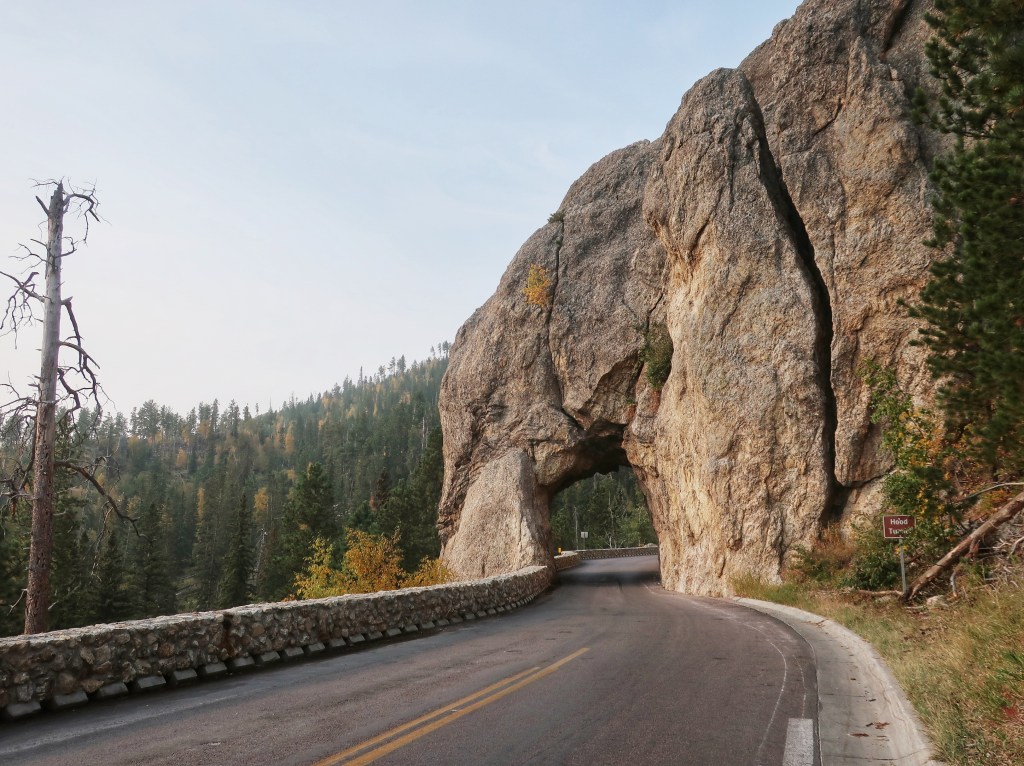
We had one final crossing of Custer State Park leaving the Black Hills. Saw more buffalo, but this time they were off the road. It’s incredible to think that there were tens of millions in North America when European settlers arrived and then hunted to near extinction. Once the railroad made it possible to ship hides back east, buffalo were killed at a rate of 5,000 per day for 2-3 years. Most were skinned and the carcasses left to rot. It decimated the Native American’s way of life.

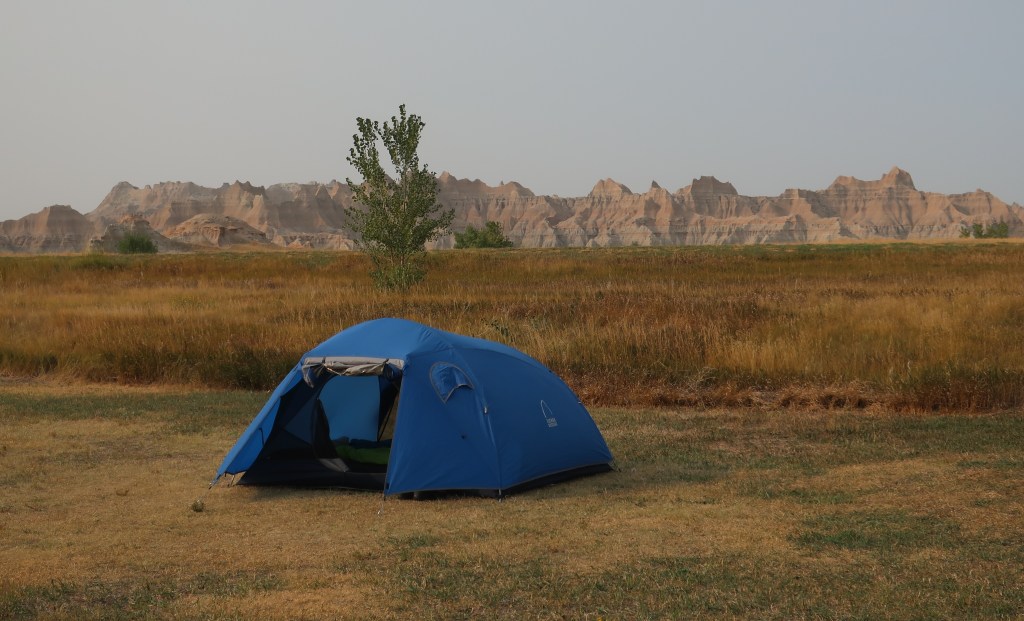
The Badlands are only a hundred miles from the Black Hills but the landscape changes dramatically and quickly. Pine and granite gives way to open rolling prarie with hardly any trees. And so far, I don’t know how to describe the Badlands. Otherworldly comes to mind. But we are here and camped for the next day or two.
The Lakota or Sioux fought the United States army in the Wyoming and Montana territories from 1866-1868 in what is known as Red Cloud’s War. The Sioux won the war which ended with the Treaty of Fort Laramie giving them exclusive rights to the area forever, including the Black Hills. Of course forever didn’t last long and the government broke the terms of the treaty following the Black Hills Gold Rush and an expedition into the area by George Armstrong Custer. The U.S. kept modifying the treaty and seized the Black Hills in 1877. The subsequent fighting led to Custer’s demise at Little Big Horn and this second war effectively ended with the Wounded Knee massacre.
The Sioux Nation sued the U.S. government in 1980. The Supreme Court ruled that the Black Hills were illegally taken and the federal government was ordered to pay renumeration of the initial offering price plus interest. The Lakota refused payment as they wanted the Black Hills returned to them. The money still sits in an interest-bearing account and has grown to well over one billion.


 TigerTracks
Such a wonderful distraction for all the bad things happening these day, seeing the beautiful country we live in through your eyes and voice is calming
I only hope that one day I get to see it for myself.
Please share with Don, I am watching and look forward to the post daily. Sue Willingham
LikeLike
Don says you’re a sweetie!
LikeLike